

Why Fève Coffee doesn’t say yes to every café
An interview with Paul, Ivan and Didier from Fève Coffee on roasting, sourcing, and building a coffee brand that lasts and conveys all of its story.

This is part of the Friday Coffee Founders series where I chat with café owners, and coffee business personalities share their experience.
Everytime I’ve tried a new café in Paris lately, Fève Coffee kept coming up in conversations with café owners the way certain names do when people really worship something. I must say though every café serving Fève was added to my recommendation list of cafés. So after weeks of trying and tagging Fève on Instagram, I finally reached out to them asking if they would be keen to meet me for a brief interview (juggling a 9 to 5 and this is a bit more work than you’d expect!).
So on an early morning in January, I headed over to their roastery/lab in the 15th arrondissement to meet with three of the cofounders, Ivan, Paul and Didier, where we spent time chatting about their journey while tasting some remarkable filter Sudan Rume from Guatemala.
Roasting coffee is a rather lonely activity and one that can quickly become repetitive. However, those four cofounders (Jonathan missing on the day I visited) took a creative approach towards their craft and passion. They started that coffee journey by roasting coffee beans alongside spices to give it a twang. It then grew and changed again, but the foundation of Fève remains: it’s about offering a declination of flavour profiles, one that fits a novice palate, but eventually a very developed palate, like Didier’s, whose journey in coffee started in the early aughts. You’ll find these through their four different collections available online.
My favourite part of meeting Fève was leaving them thinking about the entire coffee journey — how through their collections, packaging, brilliant “flash” cards about the coffee one drinks, and their personal taste, they managed to create a brand that is about coffee and all four of them.
It’s a labour of work and passion, but also immense respect and responsibility towards coffee. When I brought up matcha because it’s clear that many cafés nowadays must add the drink to their menus, Didier said, we’d love to but mastering matcha will take us several decades if we want to provide the best advice out there. We often forget that roasters aren’t just providing coffee beans, they also give advice to café owners, they help a lot of them in their journeys. To do just as amazing a job with great matcha, as Didier mentioned, would require time and expertise if you have your client’s best interest at heart.
Disclaimer: This is an interview about coffee roasting primarily, as they’ve often been interviewed about their origin story and how they think of coffee.
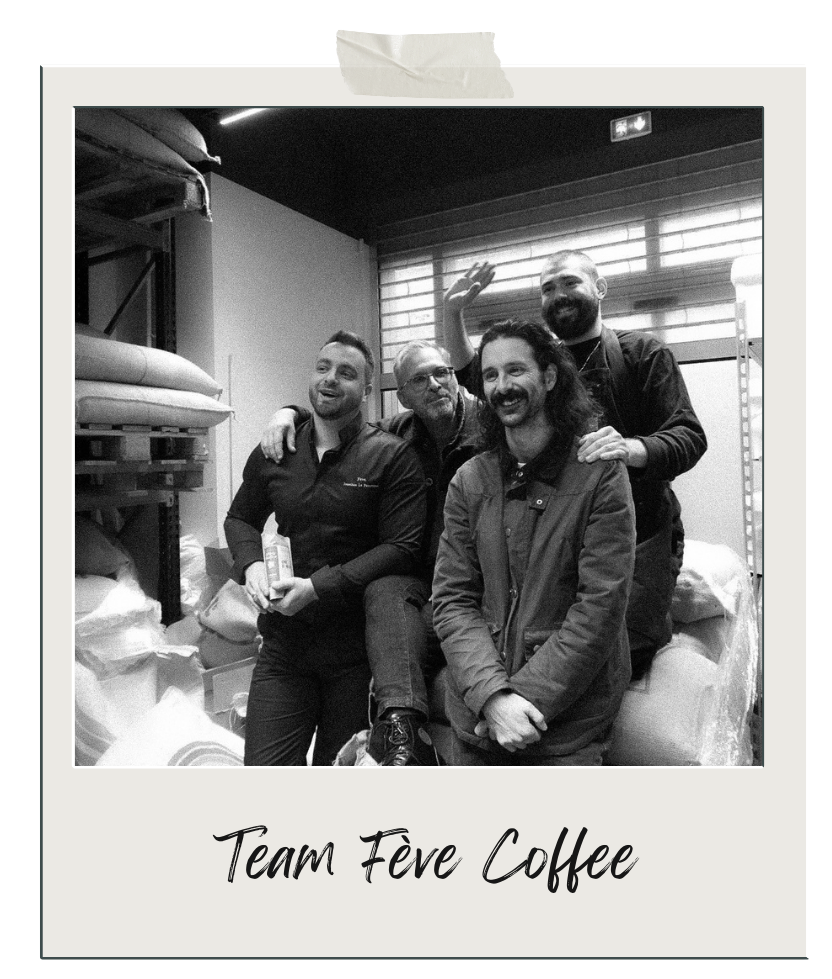
Let me start with the obvious question: how did four people decide to start a coffee company together?
Ivan: Paul and I had a communication agency at first. We were busy but we both loved coffee and had this wild idea of starting a coffee roasting company together after spending too much time in cafés in Paris. So we started talking to baristas and eventually met Jonathan.
Didier: I’d wanted to create my own brand for a while. When the four of us met - Jonathan, Paul, Ivan, and me - it just clicked. And what’s remarkable is how complementary we all are. Jonathan had competition experience - he’s the technical coffee mind, the one who has spent years understanding extraction, roast profiles, the language of the bean. Paul and Ivan brought advertising, communication and business expertise - the storytelling, the brand, the relationships. I had the sourcing knowledge, the understanding of origin, the palate trained over decades. You rarely find four people whose skills stack that cleanly.
Ivan: But I guess, we did things a bit differently as we wanted to innovate in the coffee space. We actually started with something a bit crazy: naturally spiced coffee. We called it “Fève Épice” - a wild project to mix coffee beans with spices from their terroirs. This was October 2019. We even did the Paris Coffee Festival and people loved it.
And then COVID hit.
That sounds... catastrophic.
Ivan: Actually, it forced us to slow down and think properly. Since everyone was on unemployment doing only take-away, café owners actually had time to talk to us. We did door-to-door visits. It became an accidental market test - we could really understand what we wanted to bring.
That’s when we decided to pivot fully into specialty coffee - pure single origins, no more spiced blends. We wanted to put the spotlight on the women and men behind a good cup of specialty coffee - the producers, their journey, their story - to raise awareness and encourage customers to think about what they consume.
But you started roasting in a garage?
Ivan: [Laughs] Yes. For maybe two months, we roasted everything in Jonathan’s father’s garage. Then we found a workshop in Melun, a small town, about an hour outside Paris.
The problem was, Paul and I still had our advertising jobs in Paris at around République. So it was Melun to Paris with coffee in the car. In the trunk. Every day - it was exhausting.
Every single day?
Ivan: Every day. Your 8-hour workday ended at midnight. It was brutal physically. I live in west Paris, so I had to go to the other end of 77 to load the car, three hours round trip just to move coffee.
We kept that up for about a year and a half in Melun, then six to eight months in Châtenay. Finally, we made it to Paris. But those early years were not romantic at all. We’re all really happy to have found this place in the 15th after a friend brought it up to our attention.
You’re holding the bag of the coffee we’re tasting right now. I can see ‘Fève’ written on it, is there significance to whose name appears on a bag?
Didier: [Holds up a coffee bag] When you see “Fève” marked on the bag, it means we imported it directly. We traded with the producer, paid them directly on a contract basis. A coffee like this costs about $9 per kilo in specialty.
And this year, as many of you may know, Brazilian coffee became almost as expensive as premium Ethiopian beans. That’s the reality.
Since we started Fève, we’ve roasted over 21,000 batches - and I can tell you the price volatility now is unlike anything we’ve seen before.
And prices have really only gone one direction recently, haven’t they?
Didier: Significantly. Climate issues in Brazil, droughts, unexpected frost, combined with Vietnam’s robusta exports dropping nearly 40%. Four consecutive seasons of production deficits.
But we don’t cut corners to keep prices low. We’re committed to paying fair prices to farmers. When production costs go up for them, we honour those increased costs.
That’s a choice, though. You could go cheaper, right?
Didier: We could, but there are 25 million farming households globally who depend on coffee. There’s a lot of work provided upstream by producers. We must respect their work.
Giving coffee that has taken hours of harvesting, transformation, exportation - it’s a long journey. Having quality coffee in Europe is a huge chance.
How do you think about your own role in all of this? You’re not the farmer, not the importer, where does the roaster sit in that chain?
Didier: [Smiles]
We’re not magicians. Our job is to respect the producer’s work, to sublimate it.
Jonathan’s dream - and honestly, mine too - is to process our own coffees at origin, spend time at farms. But the reality is, we can’t travel there right now. That’s where trust becomes everything.
You mentioned you can’t travel to origin because of time and money. How do you source coffee if you can’t visit farms?
Didier: What’s very hard when you start sourcing is acquiring a library of farmers, producers, importers. It takes hours spent on screens, on files, following contests like Cup of Excellence, Best of Panama.
I went to Ethiopia once, a decade ago. Travel is a real comfort, but it’s also a huge investment. The reality is that the role of an importer exists for a reason.
So how does trust work when you can’t physically go there?
Didier: What we can do is have relationships close enough to work almost directly with farms. We ask for samples from producers, receive them, validate them in cupping, test on a micro-roaster. Once we find what interests us, we engage in a signed contract directly with the farm.
Then we bring coffees in - usually grouped shipments - via an importer in Europe. About 60% of our volume comes through importers. About 20% is direct trade where we handle everything.
Why not just do 100% direct?
Didier: People often ask that. But working direct, you only reach a certain percentage of producers. Most don’t have the means to export. It requires expertise in administration - import-export is extremely complicated.
Importers allow medium-sized producers to export. They do the digging work. Take Ethiopia - it’s garden coffee, not plots of hundreds of hectares. An importer creates a mesh of washing stations and cooperatives, builds relationships. A trust relationship is essential.
When you work with importers who have 10 cooperatives and 50 farmers, you extend the supply spectrum for these people - and for us.
What’s the biggest challenge with import/export that no one talks about?
Didier: The unpredictability. Weather patterns, droughts, hurricanes can affect yields. Geopolitical instability or civil unrest can delay exports. Market volatility from speculative trading. Port closures. Shipping delays.
Every shipment must meet customs requirements, health standards, organic certification, food safety compliance, heavy metal testing, EU labelling, traceability protocols, evolving legislation like EUDR. Importing coffee demands expertise and meticulous planning.
And in 2024, nearly half of all container ships arrived late. When coffee doesn’t arrive as planned, we’re forced to source at short notice from outside our usual partnerships. It’s incredibly stressful.
That’s why trust with importers is non-negotiable. You need people who know the regulations, have relationships at origin, understand quality, and can navigate chaos.
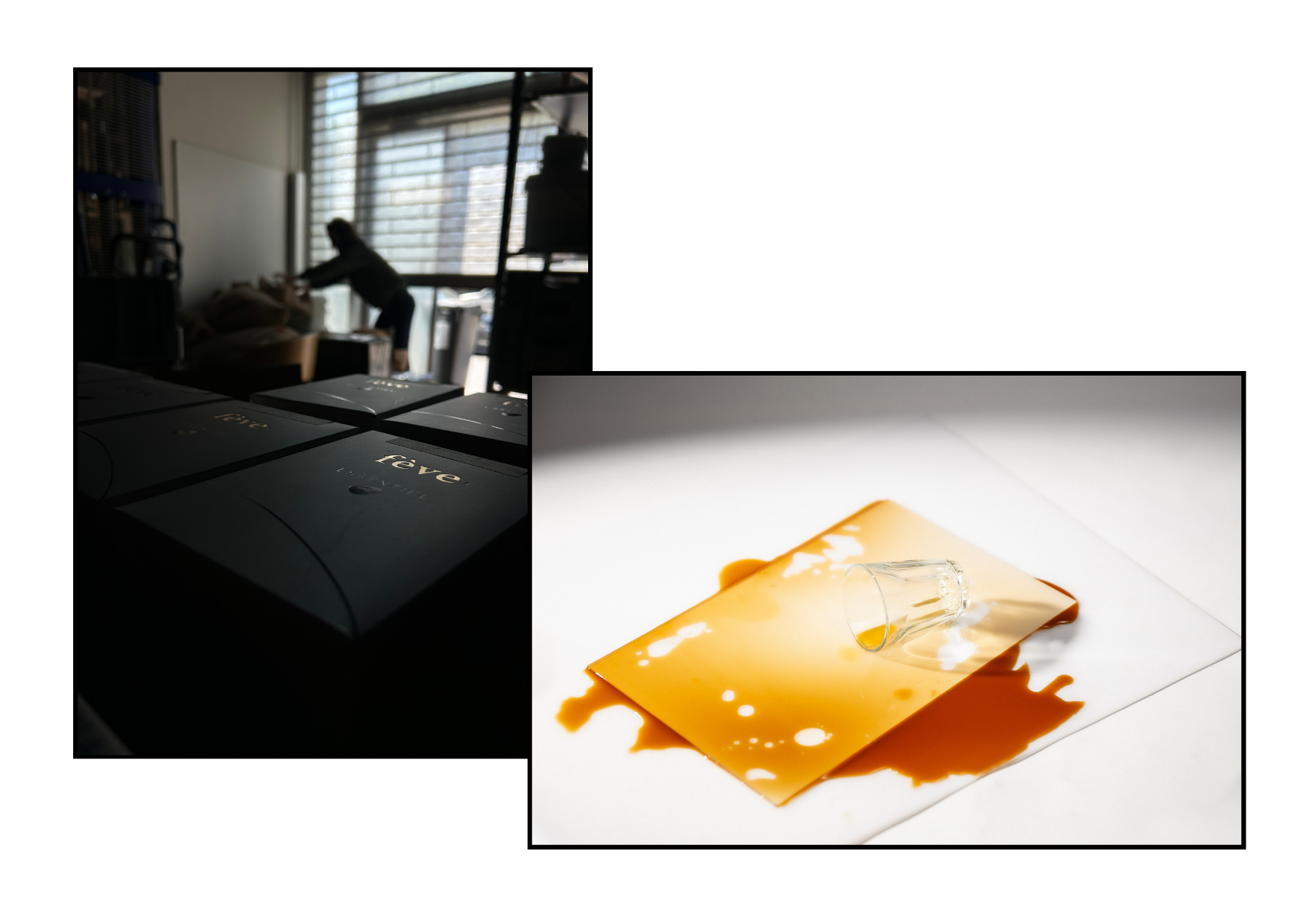
When a café comes to you, what are your criteria? Do you say yes to everyone?
Didier: No, we can’t say yes to everyone. First, there are customers who don’t look for specialty coffee above 84 points - and all the coffees at Fève are above 84.5. So some clients simply won’t find what they’re looking for here.
The second aspect is client selection based on minimum training. We help them acquire training through partnerships we have with trainers.
If someone’s only goal is to serve coffee without caring about quality, we redirect them - because in the end, there is a lot of work provided upstream by the producers. We must respect their work.
We can absolutely give a chance to beginners who want to learn. But people who buy just for the specialty coffee image - we redirect them to industrial coffee. And we don’t make beans from beans.
If a café chooses a roaster, what are the 5 non-negotiable criteria to evaluate - beyond taste?
Didier: First, having traceable and sustainable specialty coffee with complete production information such as the name of the farm or cooperative, the names of producers outside of cooperatives obviously, the origin of the coffee with country, region, city or village, the type of processing like washed, natural, honey and others, the names of the coffee lot varieties, and the harvest date of the lot with month and year, and if possible an explanatory sheet about the farm’s history and its producers as well as their technical means of processing coffee cherries.
Second, privileging roasters who work with the willingness to respect the seasonal rhythms of coffee by origin because this limits aging phenomena of green coffee which causes the appearance of off-flavors.
Third, knowing the exact roasting date on the coffee bag in order to evaluate its degassing stage and its freshness before its aromatic decline phase.
Fourth, working with a roaster whose coffee roasting profiles are adapted to each extraction method, whether filter or espresso.
And fifth, having support and guidance on the choice of equipment and training that matches the needs of the establishment in complete transparency. We advise during the launch phase to choose a roaster and local partners because the exchanges will be frequent and often require physical presence.
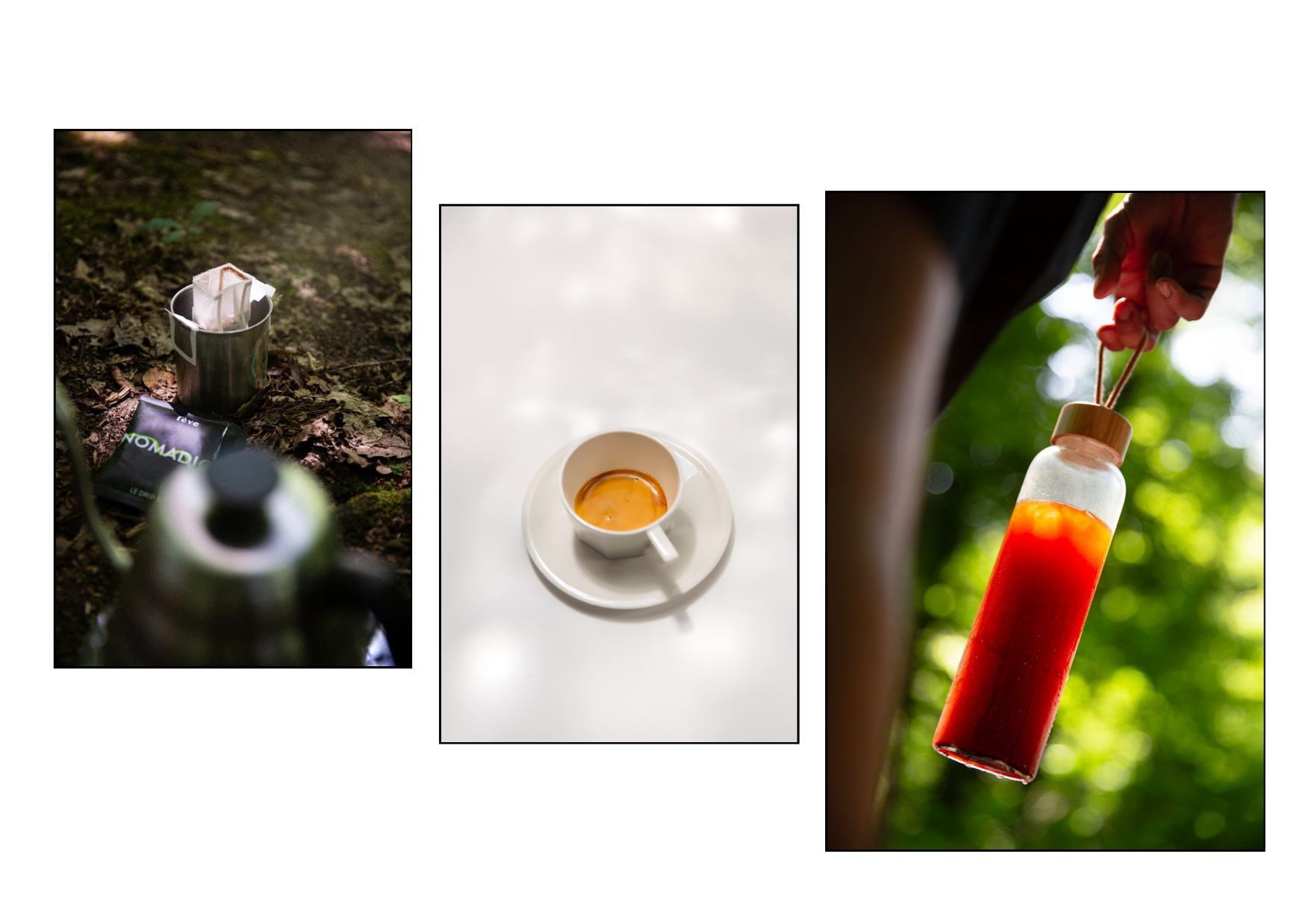
What do you do during the first 30 days with a new coffee to make the espresso consistent?
Didier: Roasting the coffee brings the transformation of oxygen indirectly contained in the green bean into carbon dioxide.
This gas, when it doesn’t have time to evaporate from the roasted bean, brings instability to the extraction with a lack of aromatic openness, a sharp acidity in light roasts, and a diminished perception of sugars.
To limit this phenomenon, we must give time its place and accept letting the coffee rest for a period of 20 to 35 days after the roasting date. This duration represents the time necessary for the CO2 to evaporate from the coffee beans depending on the type of roaster machine, and it’s called the degassing phase. We advise waiting until the end of this important stage before considering coffee extraction. Often this degassing phase must be anticipated with a buffer stock divided between the roaster and their client.
Now, I’m curious, the palate you’ve developed, is it a gift or a curse?
Paul: [Laughs] Both, honestly. When you start, everything tastes similar. You have a coffee, it’s good or it’s not, but you can’t really explain why. You’re a novice and it’s actually quite comfortable - a decent cup makes you happy.
But the more you work in coffee, the more you taste, the more your palate develops and you start identifying things - acidity, structure, flaws, the terroir. And at some point you realise you can no longer go back. A coffee that would have delighted you three years ago now tells you a completely different story. You taste the errors, the over-roasting, the shortcuts.
It becomes a curse in the best way. You need better and better coffee to feel that same satisfaction. But it also means that when you taste something extraordinary - like what we’re drinking today - you truly understand why it’s extraordinary. That makes it all worth it.
Roasting coffee every day - what does that actually look like? Because from the outside it seems almost meditative, but I imagine the reality is different.
Didier: [Laughs] Meditative is a generous word. Roasting is, in many ways, a lonely exercise. You’re watching screens, managing temperature curves, monitoring airflow - it’s high precision work. One wrong move and you’ve burnt a batch.
Actually, that’s something that drives me a little mad - in French we still call roasteries Brûleries. A brûlerie means a place where you burn things. It’s a complete misrepresentation of what we do. The entire point is to not burn the coffee. We’re trying to bring out the best of the bean, not torch it.
Ivan: That’s why the cuppings matter so much to us. After hours alone with a roasting machine and a profiling screen, sitting down together to taste - it becomes almost a ritual. The four of us around a table, evaluating what we’ve roasted, talking about what we’re getting from each cup. That’s where the work becomes shared again.
Didier: It’s the human part of a very technical job. And it keeps you calibrated - because your palate can drift when you’re tasting alone. Tasting together keeps everyone honest.
I had a café myself - in Cape Town, actually - so I understand that side. But what about launching a roastery? What would you tell someone starting from scratch?
Didier: [Pauses] Be careful - we’re talking about two different things: a coffee shop and a roastery.
At minimum, have knowledge of coffee and tasting. It’s very difficult to launch without being able to identify flaws in a cup.
You need to understand the product, know species and varieties to better buy them and advise clients. There are coffees that are more corpulent, softer, more acidic, more structured. To know that, you have to spend time tasting - as a barista, roaster, Q grader.
To launch with no knowledge is possible, but it requires huge commitment in learning. You’ll need to test cups in espresso - so learn barista work. You’ll need to taste like a professional. You’ll become a technician because a roaster machine is not a quiet river. Daily maintenance. Revisions. You’ll need to be an IT technician because roasters work with profiling software.
I think going through collaborative roasteries first - where you can learn from peers for a year or two - can be a good way to be sure of your project, to know if you have the competence.
And the money part?
Paul: [Laughs] You need more than you think. Much more. The garage phase taught us that. Equipment, rent, green coffee inventory, staff, certifications, insurance, logistics - it adds up fast.
With coffee prices hitting record highs and remaining volatile, you need capital reserves to weather the storms. Because there will be storms.
Thank you Didier, Paul and Ivan for your warm welcome and all the coffee goodies I left with ☕️
For more from Fève Coffee follow her on Instagram and visit their website 🔗 and if you want to meet them, join the Le Paris Café Festival this month of April
Interested in being featured in Founders Coffee Friday, or know someone who should be? Drop me a line here.
Julie Hanell works for Perfect Daily Grind, and writes The Coffee Dispatch to meet incredible coffee people and share their stories with you. Want to see more? Check out her LinkedIn and her Coffee Before Everything Else newsletter