

The Café Dispatch #16
On specialty coffee's in Cyprus' local culture, the laptop ban debate, and one café that lives rent free in my head

Welcome to the Café Dispatch, a weekly letter about interesting café trends across the globe. If you enjoy it, please feel free to share it, and don’t forget to grab your favourite cup of coffee ☕️
Nothing like traveling to the other side of the world to remember that specialty coffee isn’t going anywhere – in fact, it just keeps growing. I landed in Cyprus this past Saturday and ran to Nomad Coffee for my beloved regular flat white which is consistently good. Considering Cyprus’ love for dairy, their milk is just “yum”. I have yet to get a creamier flat white anywhere else in the world.
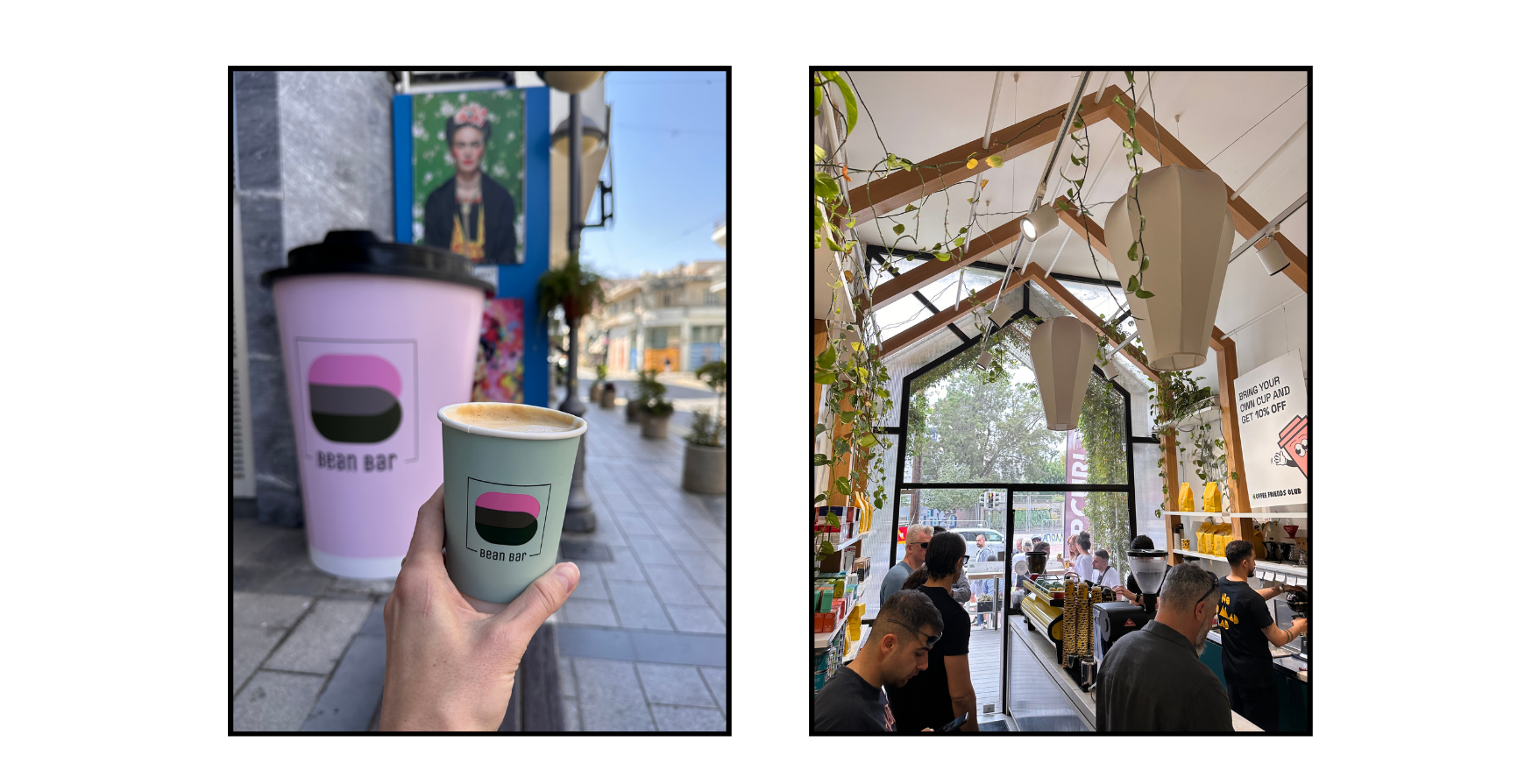
But there’s an upward trend in Cyprus to share more about coffee origin and flavour notes. A wish to educate the locals obsessed with freddo espressos and less so with hot coffee. I have to state that one of my last hot flat white’s espresso was blended in a milkshake blender before being poured into a cup with hot milk. Yes, the barista was CONFUSED to say the least.
That moment, watching him reach for the milkshake blender, made me realize something. Specialty coffee is expanding so fast that it’s colliding with deep-rooted local cultures in fascinating, sometimes messy ways. The gap between “how we’ve always done it” and “where the industry is going” isn’t just about technique or equipment. It’s about identity, tradition, and what coffee means in different parts of the world.
And that collision of beliefs is happening everywhere. From Berlin to Tokyo to Paris, cafés are being forced to rethink everything from who they serve, how they serve, and what their spaces are actually for in 2026.

Can “laptop-free” coffee shops actually survive?
58% of employed Americans now work remotely at least one day per week. That’s 92 million people potentially treating coffee shops like “unpaid” co-working spaces.
At The Barn in Berlin’s Neukölln neighbourhood, laptop users were occupying more than 70% of seating for hours on end.. which dropped their revenue by 25%. After such high revenue loss, they were forced to introduce a complete ban on weekends, plus a one-hour laptop limit during the week.
It feels though that there’s a way to design a café where unfolding your laptop and start working feels wrong. Thinking back of the tiny coffee shops in Paris where these work as extensions of our living rooms, and not boardrooms, laptops are automatically rare and to be completely honest, they’re also often banned.
But here’s where I’m a little conflicted. As someone who often visits cafés on weekends and needs that atmosphere to write, I struggle with the banning rules. My best ideas rarely come from my desk or kitchen table at home. They come from the hum of conversation around me, the barista calling out orders and the ongoing chitchat nearby which I’ll happily eavesdrop on in.
At the same time, as a former café owner, I get it. Coffee shop owners didn’t open a café to be surrounded by remote workers who don’t appreciate their playlist nor their coffee or food… who are rather trying hard to create spaces where people connect with coffee, with baristas, with each other. When 70% of your seats are taken by people getting one drink for four hours, nothing works out the way it should…
Maybe the most successful cafés in the future won’t be the ones trying to accommodate everyone, but the ones who implement interesting rules to encourage people to stay around, work but also connect and chat, and mostly consume more than one coffee per 4-hours stint.
📌 What do you think? Would you keep visiting your favourite café if they banned laptops on weekends?

If you’re planning a trip to Korea (another one… but they have so many crazy places!), put this one on your list: Waveon Coffee sits right by the ocean in Gijang, about 30 minutes outside central Busan. And when I say “by the ocean,” I mean this three-story café gives you expansive ocean views from every corner. The building itself is designed by renowned architect Kwak Hee Soo and perched on a cliff edge, with waves crashing below.
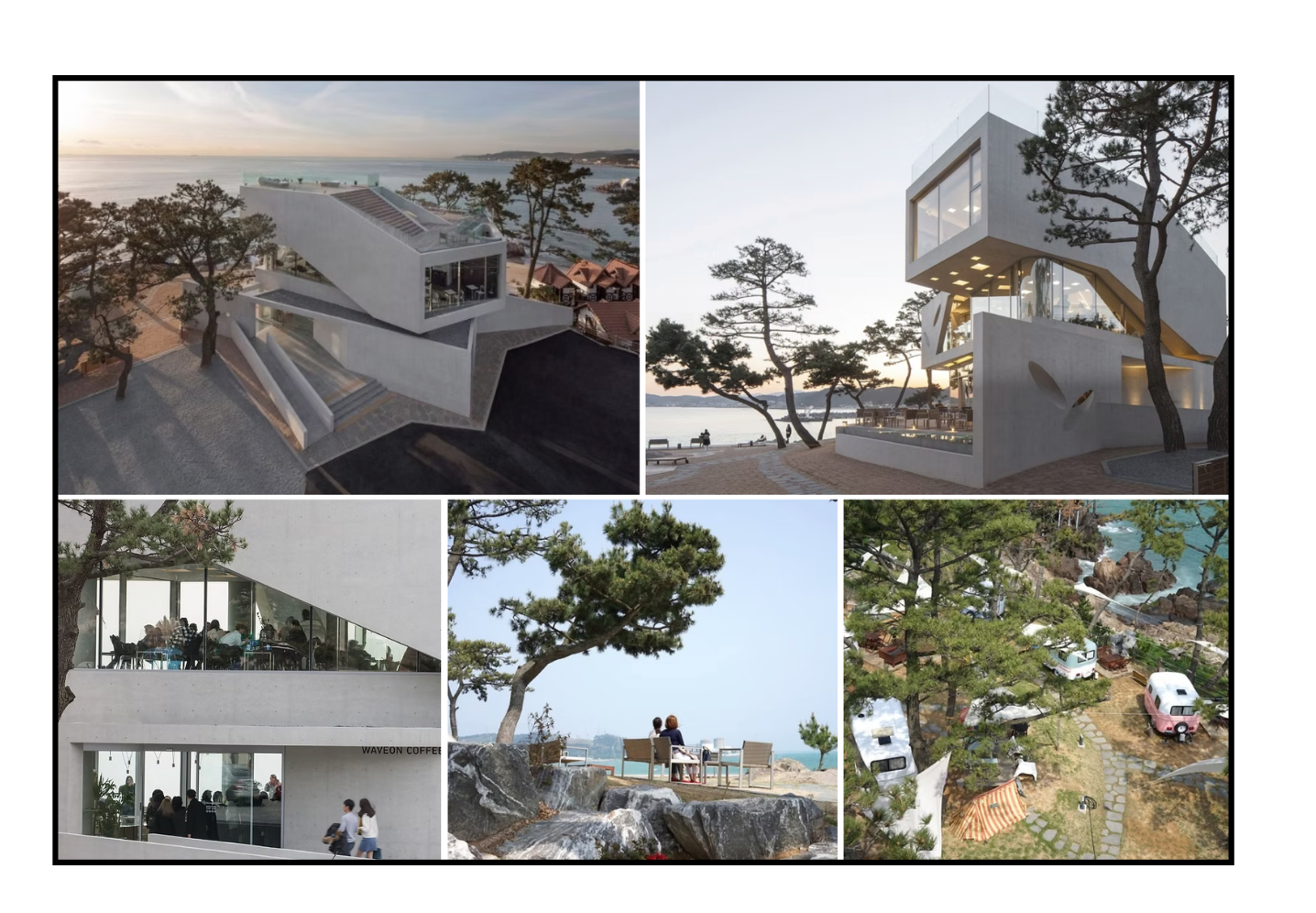
But beyond the stunning architecture, they’re selective about their coffee sourcing. Over 90% of Korea’s green and roasted coffee comes through Busan’s port, positioning them perfectly to be picky about quality. The baristas are knowledgeable, the pour-overs are meticulous, and the whole experience looks like entering a vault turned coffee omakase on the beach.
What I’d order: The Wolnae latte (a signature house drink) and their Brazilian Campo Alegre drip coffee. Grab a seat on the rooftop if you can. Apparently their sunset views are unmatched.
📌 On another note, Greetvi Coffee, seems to be just as gorgeous of a café too!

I’m introducing a new section to the weekly Café Dispatch. As an avid reader and someone who has ditched all newspapers subscriptions for Substack subscriptions, I felt the pull to share some great reads that relate to the following topics;
Coffee (the commodity and industry)
Cafés and coffee culture
Small business entrepreneurship
As some of you may have noticed through my notes activity, my big dream for this year is to launch a small collection of coffee cups designed with fellow coffee lovers.
It’ll take time and I have a LOT to figure out but I find Substack to be an incredible resource to learn from others - so hence sharing #3 topics below,
“What’s REALLY Happening in China’s Coffee Scene” by Sam Tang
This is hands-down the most comprehensive breakdown of China’s green bean supply chain I’ve ever read. Sam takes you from Yunnan coffee farms (stuck between being “looked down on” and “looked forward to”) all the way to why Ethiopian beans jumped to become China’s #1 import in 2025.
What I enjoyed about this piece? Sam takes the time to explain why certain beans work in certain cities, like how northern Chinese consumers show way higher tolerance for dark-roasted Mandheling because of cultural influences from Japanese coffee culture and bolder flavour preferences. Or how the bean “Oiran” (花魁, literally “queen of flowers”) became as recognizable as Geisha in China purely because of genius naming and marketing.
This is the kind of industry-level storytelling we need more of. If you want to understand where coffee is actually heading bookmark this read.
“Groundskeepers: Running Up That Hill” by Noa Berger
Okay, first thing first, when I saw this title I immediately had to sing it (thanks Kate Bush for this brilliant song!) and thanks Noa for the great 80s reference!
This piece is so important!! Noa writes about gendered coffee labor in Kenya and El Salvador, specifically how women do the majority of the grueling farm work (picking, sorting, processing) but are systematically excluded from decision-making, land ownership, and the financial rewards that come with specialty coffee’s “story of origin.”
She uses structuralist anthropology (the nature/culture binary) to unpack why women’s labor gets coded as “natural” and therefore undervalued, while men’s work gets seen as “skilled” and worthy of recognition. It’s sharp, it’s uncomfortable, and it made me rethink every single origin story I’ve ever read on a coffee bag. This is the kind of writing that changes how you see an entire industry for the better because inclusion is how we move forward.
“On Starting a Small Business” by Jenna O'Brien
Jenna’s piece about launching her greeting card company from a 700 sq. ft. apartment landed at the “perfect” moment in my life.
As someone building a coffee newsletter and soon, hopefully so, a coffee cup line while juggling a million other things, I couldn’t be happier to have read her piece. I am not as far as her in that journey yet but I love it when small business entrepreneurs take us on their business journey. And her Q&A about creative entrepreneurship is packed with advice I keep coming back to. Especially her answer about not competing with AI by creating work you’re genuinely proud of. If you’re building anything creative right now, read this.
Thank you so much for reading me ☕️
Julie
Ahhh thank you Julie 😍😍😍 honored that you read and liked it!!
What an interesting point about cafes as working/laptop spaces...truly hadn't really thought about this. Love your work, Julie!