

The Café Dispatch #17
The nostalgia trap in café design, the Beijing structure that's rewriting what a café can look like, and why memory is not the same as personality

Welcome to the Café Dispatch, a weekly letter about interesting café trends across the globe. If you enjoy it, please feel free to share it, and don’t forget to grab your favourite cup of coffee ☕️
What’s Brewing in Cafés Right Now
It’s a normal thing that on Sunday afternoons I lose myself down café rabbit holes, flipping through the pages (digital, that is) of all the coffee, design, art, architecture, and travel bibles I’ve saved over the past year in a bookmarks tab. That afternoon usually vanishes, and will certainly last longer than a mere 20 minutes, which is what I usually aim for before starting to draft the next edition of The Café Dispatch.
And this week, somewhere between my third coffee and losing track of time entirely, I noticed that the only topic showing up everywhere, and I mean everywhere, across every magazine, every design account, every architecture blog, every newsletter I follow, was nostalgia. It was inescapable and I’ll tell you why that bothers me so much: because out there, in café after café, nostalgia is being mistaken for personality. And it is not the same thing. Not even close.
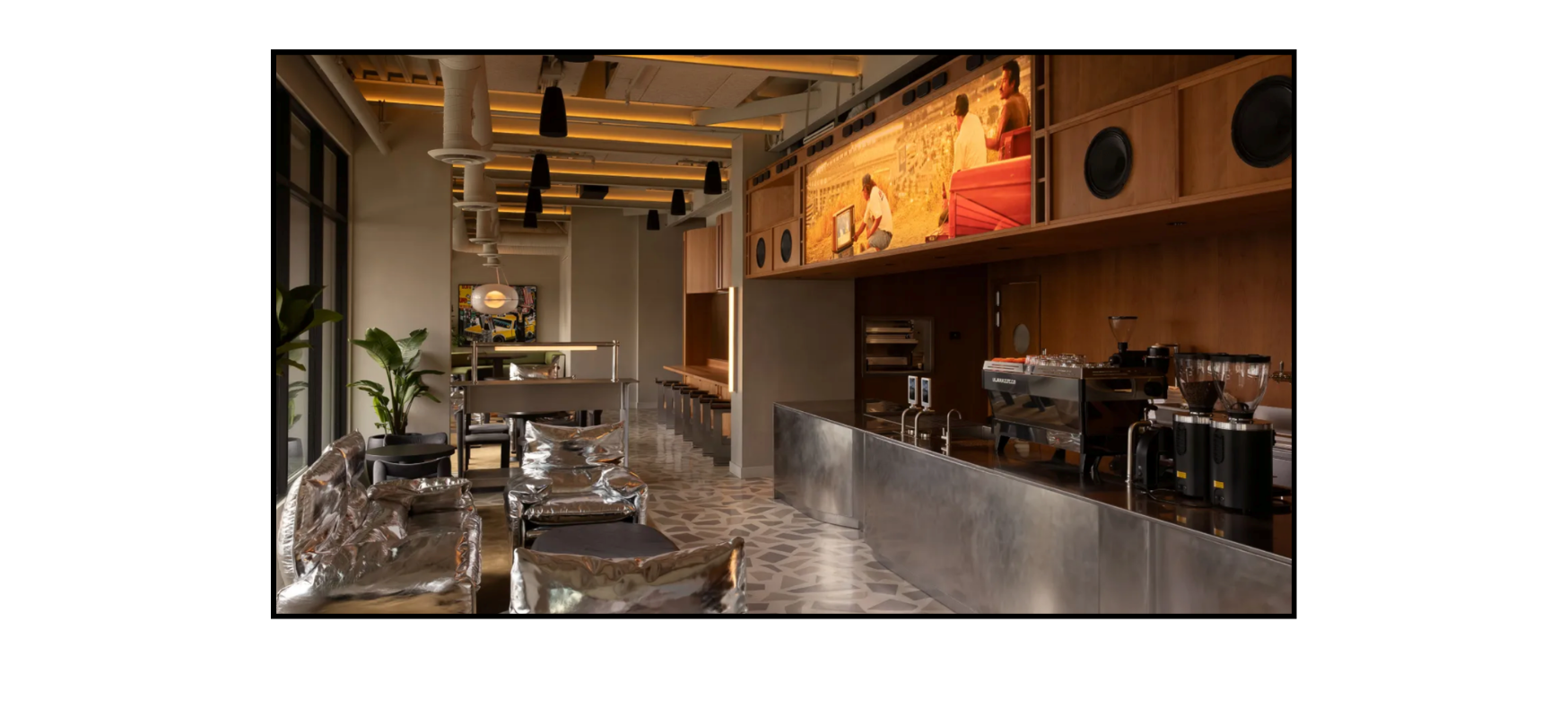
I want to be fair, because Bam Bam Coffee in Vancouver makes the case for it. A place where not only the interior has strong 90s vibes but also the food, where the entire menu exists to remind you that back then, we indulged and didn’t care, that a donut or two could make a day measurably better, and that if you were lucky, you’d have time for a full brunch with pancakes, bottomless coffee served in a mug that only you had gotten.
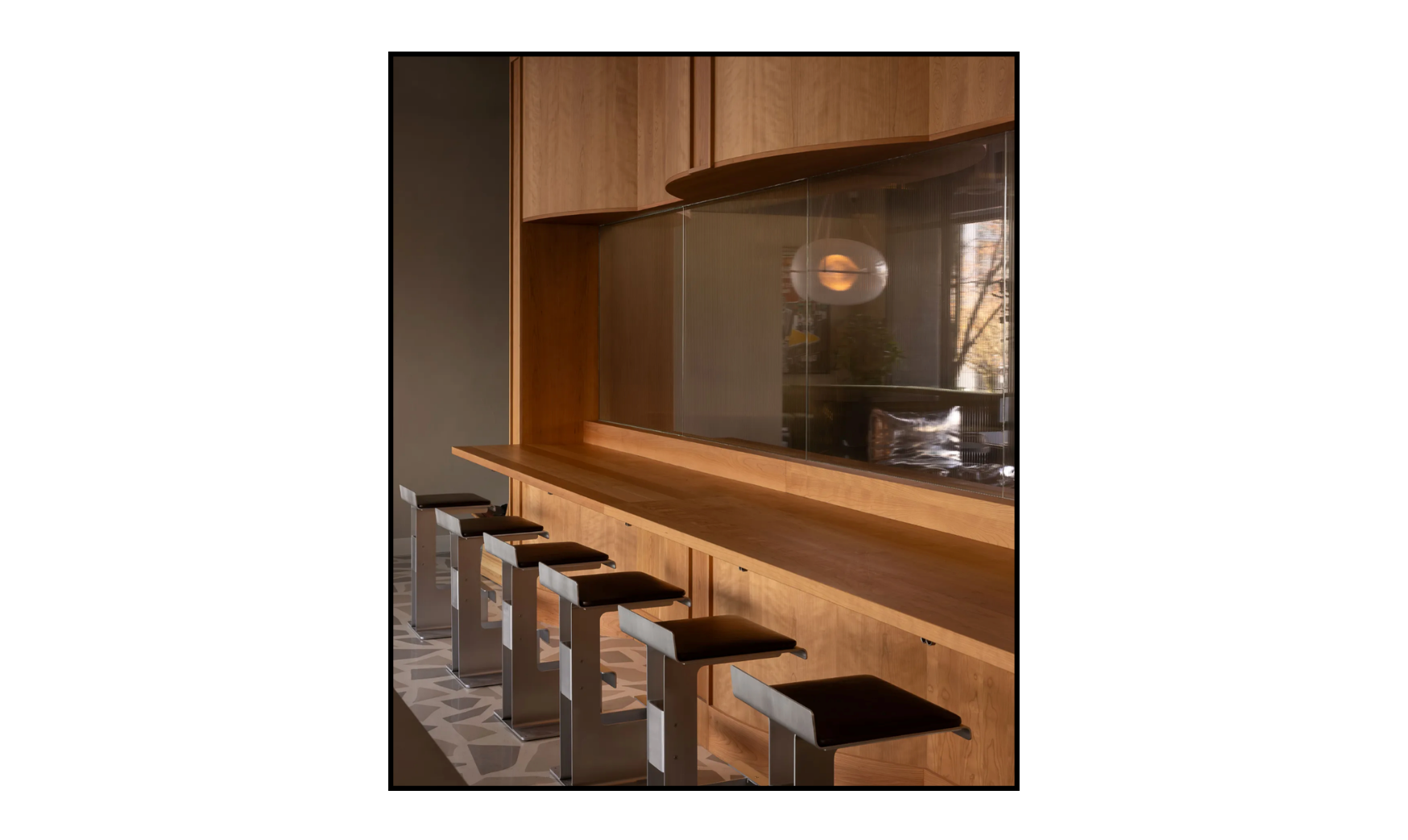
Yes, I see the appeal completely, and though I’d like to live in a moment where the present feels different from an eternal scroll that leaves you slightly hollow, I wouldn’t mind spending an afternoon at that bar, sipping coffee, chatting with whoever happened to be next to me, and singing along to some Hanson Brothers, who were three, and whose eldest, Isaac, was of course my future boyfriend when I was finally old enough to fall in love with celebrities.
After watching Jasmine Bina‘s talk The Age of Potency for the fifth time (yes, fifth, and I will watch it again), I keep coming back to what she says so well: “we’re living in a moment with no endings, no beginnings, no past, no future.” Just an eternal, anxious present, and when you can’t imagine the future clearly, nostalgia becomes a coping mechanism. It delivers the idea of a feeling, the sensation of safety and warmth, without requiring anyone to actually stand for something new.
And that, I think, is where cafés are getting it wrong.
A café that leans entirely on nostalgia is asking its interiors to do all the personality work, and that’s fine until every café on your street is doing the same and you suddenly cannot tell who is who, what they believe in, why they exist. Memory is not a point of view, and right now, the industry has an awful lot of memory and not quite enough innovative perspective.
📌 How do you think about nostalgia in cafés right now? Are you tired of it yet, or does it still give you that feeling it promises?
Cafés To Visit Around the Globe
Who wouldn’t smile seeing this café appear in the middle of a square, whether you were rushing to the office or catching a train?
I came across Kurasu Pop-Up by Atelier L this weekend, which just opened in Beijing, and I am absolutely, completely obsessed. This is what I mean when I talk about innovation, creativity and real personality, the kind that doesn’t borrow from the past but builds something that could only exist right now, in this exact city, with this exact intention.
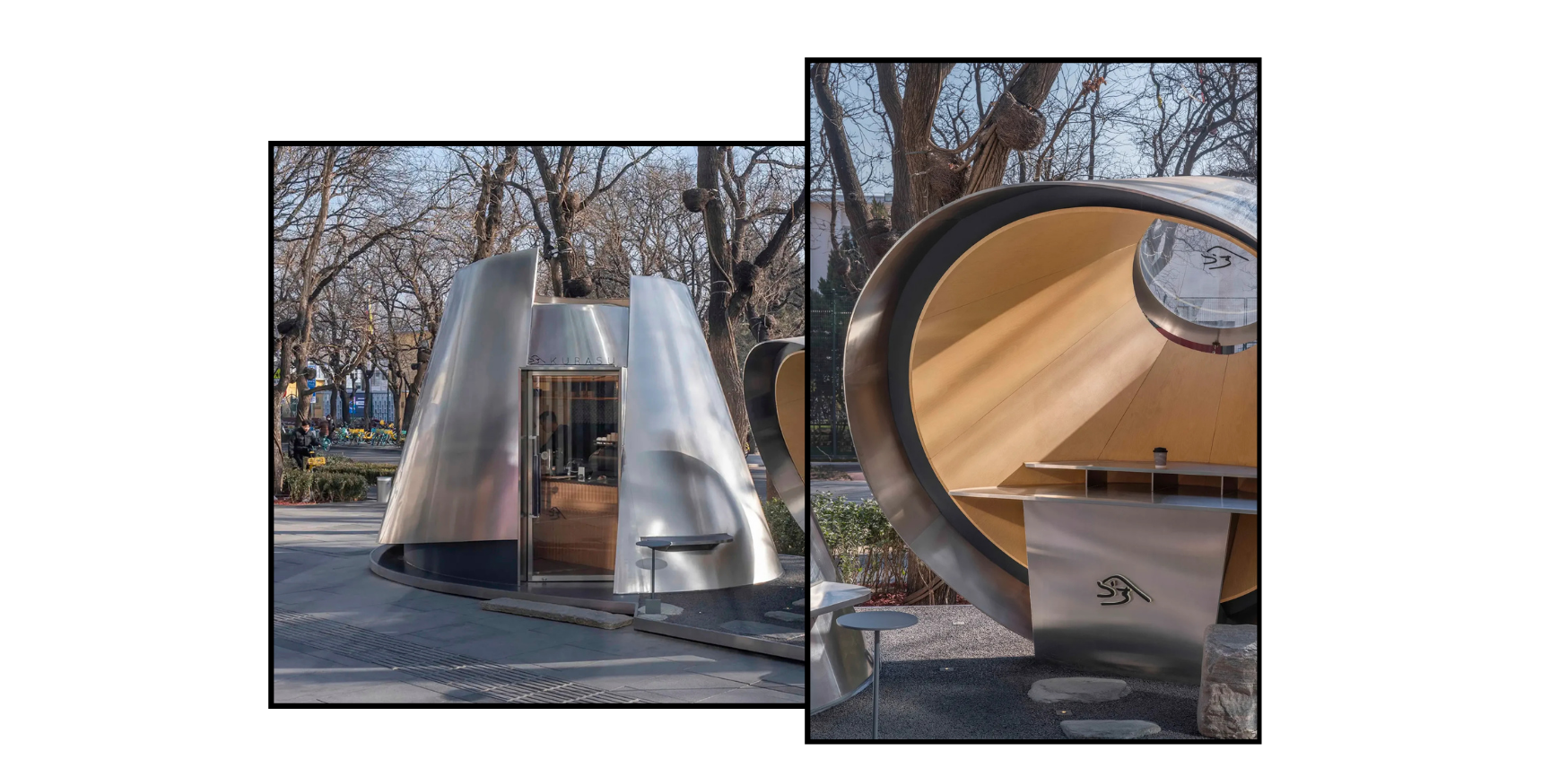
The form references pour-over coffee (which all of us noticed immediately and felt very seen by), but it is also a wink to the shared history between China and Japan of paper folding, with the steel sheets designed to echo curved sheets of paper mid-fold, as though the structure itself was caught in a moment of transformation and stayed there.
And if you look even closer, the stainless steel facade acts as a flowing canvas for street lighting, capturing the seasons, capturing the people passing through the square, making every person who walks by unknowingly part of the café’s experience, which I find extremely romantic.
This is a café that knows exactly what it is, and more importantly, exactly what it wants to offer the coffee lover visiting for their favourite ritual.
What I’d order: Whatever pour-over Kurasu is featuring that day. This is a company that devotes its time to excellent single-origin coffee on pour-overs.. so we must.
Substack Reads to Save For Later
“Coffee Shops, Third Places and Social Design” by Jade Isaacs
I read this faster that I could scroll. I loved Jade’s essay tracing how coffee shop design has evolved and what it tells us about how we exist together. She has the eye of a true café ecosystem lover, but she uses her social anthropologist’s studies to add that extra layer. After reading this, I am convinced that I need to go take anthropology classes. There’s just no other way out of this new rabbit hole now.
“Coffeehouse Culture: The Commodification of an Experience” by Elena Olvera
Published in 2024 yet feeling so extremely current. An observation of how our dear social media have made us believe that the entire experience and aesthetic of a café is simply based on marketing tactics. Are we truly feeling what we do when visiting a café or are we simply victims of cafés marketing genius tactics? A read I enjoyed and got me thinking way too long about what opening a café and visiting one should be about.
Thank you for being here! It means the world to me. If you love reading The Coffee Dispatch and want to further support my writing, please like this post, leave a comment, share it with a friend, or upgrade to a paid subscription.
Follow along on LinkedIn, or read my LinkedIn newsletter for practical café & coffee gear tips, and if you’re interested in collaborating, send me an email at hello@juliehanell.com.
Thank you for sharing my article, so glad it resonated and that it inspired some anthropological curiosity! It’s really lovely feedback to read :)
I love your point here about the prioritisation of a nostalgic aesthetic over a truly personable experience. And it’s very true that nostalgia can signal a lack of imagination about the future - I’m actually working on an essay around this topic (retro futurism and nostalgic imaginings of the future) at the moment :)
#17 and I'm still obsessed