

Café Dispatch #26 : The Concept Europe Hasn’t Caught Up To Yet
Where café culture is stretching furthest, an Indonesian coffee chain unlike anything we have here, and the week’s coffee headlines

Welcome to the Café Dispatch, a weekly letter about interesting café trends across the globe. If you enjoy it, please feel free to share it ☕️
I’m writing this letter from New Delhi, where I’ve spent the last 24 hours doing what I love most: café-hopping through the spots that make headlines here and, in some cases, abroad too (Blue Tokai, looking at you). And in barely a day, I’ve already learned more than I expected.
Most of it came from talking to people. Customers lingering over their coffee were happy to tell me why they’d chosen this café over the dozen others on the same street. Baristas were even more revealing, sharp behind the machine, clearly running the show on the floor, but surprisingly hazy when I asked them about the brand they work for: who owns it, what it stands for, where it’s headed next. That gap, between the craft on display and the story underneath it, is something I want to dig into as branding as become more important than ever before.
This week’s Café Dispatch includes: how India’s specialty coffee scene is shaping demand in ways I didn’t anticipate, where coffee chains seem to succeed more easily here than they do elsewhere, and top news of the week

If you’re living in a big city, I have a feeling you’re seeing something similar to what I am: coffee shops opening and chasing whatever trend is loudest that month. I’m not always convinced there’s real research behind it, or that the people making these decisions have the background to justify every one of them, but one thing is consistent: Japandi design is still everywhere. It’s just now wrapped around a specific hook, music, art, whatever else, as long as it gives people one more reason to walk in beyond the coffee itself.
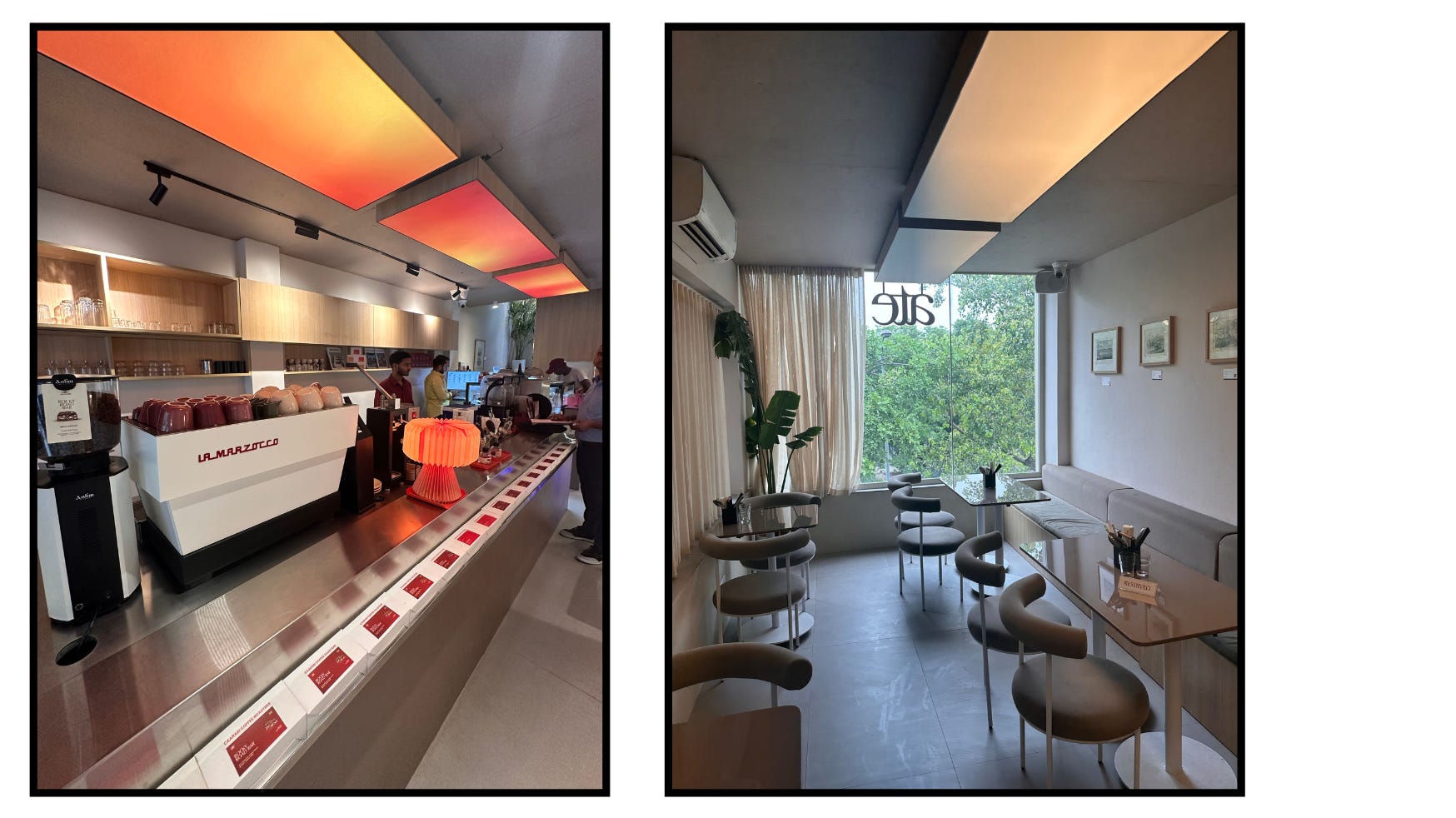
Scouring the Lodhi district in New Delhi, few cafés actually have a personality, because being intentional is probably the hardest skill required for anyone who gets into specialty coffee hoping it’s also a fast way to make money.
A few cafés gave me exactly that impression: an aesthetic borrowed straight from the Instagram algorithm, with no real system in place to communicate their values or explain why they serve the coffee they do. In fact, I had to pull up their Instagram to learn more about the café than I did by walking in.
That said, a handful of cafés did stand out, and if you’re curious, don’t miss next week’s longer cultural dive into them.
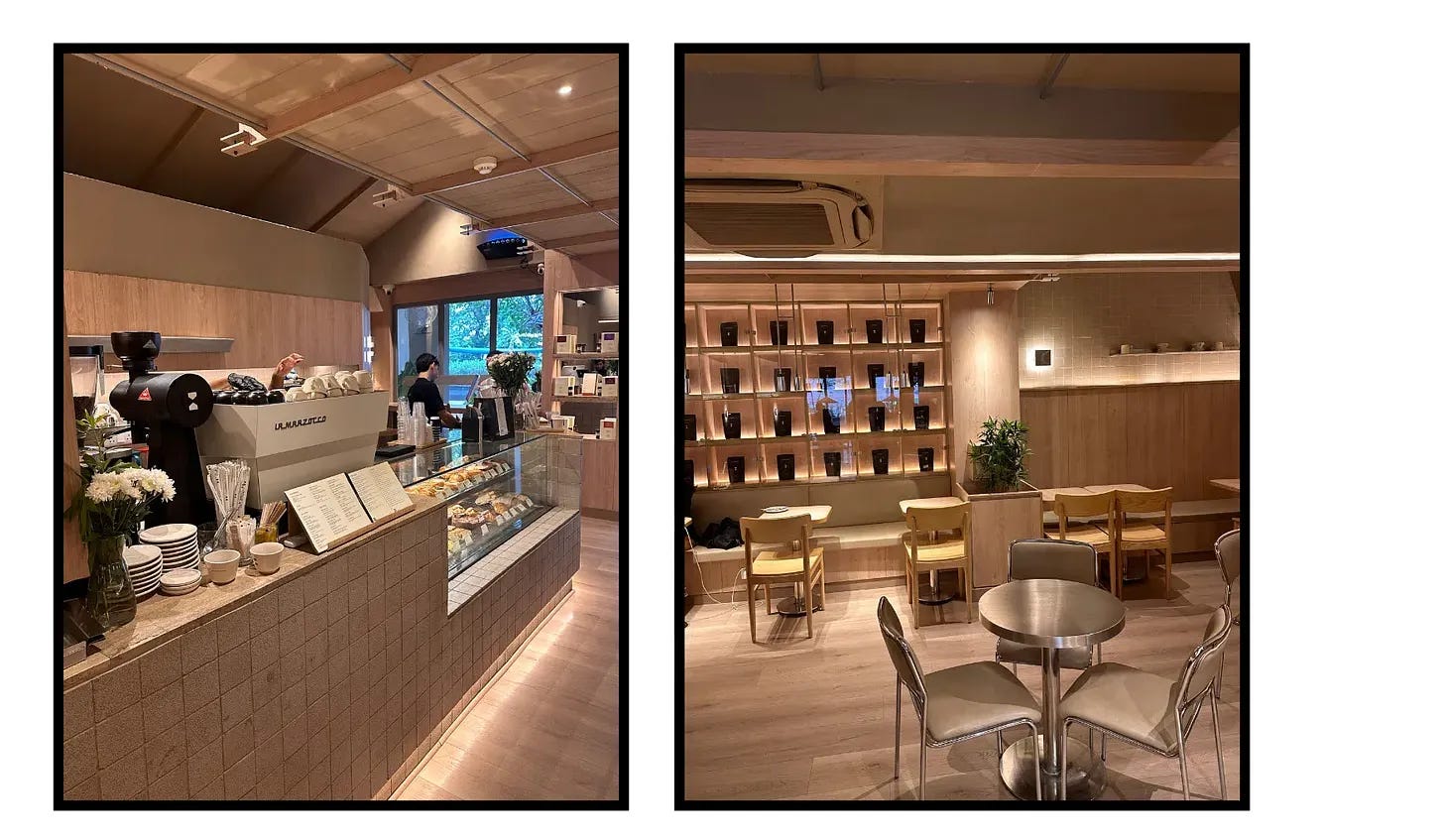
My takeaway from one day in India alone: if you want to be the next café, the kind of place people will drive across the city for, especially in a market like this, interior design alone won’t do it. You need something that actually pulls people to you, and something that makes them want to stay once they’re there. I know a major buzzword, still today for many is, community. But as a café, you need to think deeper about what that is for the people coming to your café. How does it look like, what does it mean to them, how can you ensure that regardless of your location you can create it… and so on.
Speaking less of community and maybe more of virality for a market like India, Bokka café in Mumbai is making a lot of noise. Would you go?

Toko Kopi Tuku, Indonesia.
This is the one I want to see with my own eyes. Tuku is a Jakarta-born coffee chain that doesn’t really resemble a café at all but rather an excellent brand world execution.

Tuku is credited with kicking off the entire kopi susu kekinian wave in Indonesia: iced milk coffee sweetened with palm sugar (arenga), sold cheap, sold fast, and built almost entirely around mobile ordering through Gojek and Grab rather than a seating experience. Some outlets barely function as a place to sit at all, they’re closer to a coffee kiosk optimised for a delivery rider to grab and go. That alone is a complete inversion of the “immersive third space” thinking I usually write about here.
But the part that’s really well executed and works is the branding. Tuku calls its customers tetangga, “neighbours,” and has built an entire identity around that: a merch line (Toserbaku) selling socks, umbrellas and stainless mugs, a running series of “neighbour” spotlights on ordinary people (a parking attendant, a group of cyclists, palm sugar farmers), and, memorably, an “NFT Neighbours” drop a few years back. It reads less like a coffee brand and more like a cultural membership scheme that happens to sell coffee.
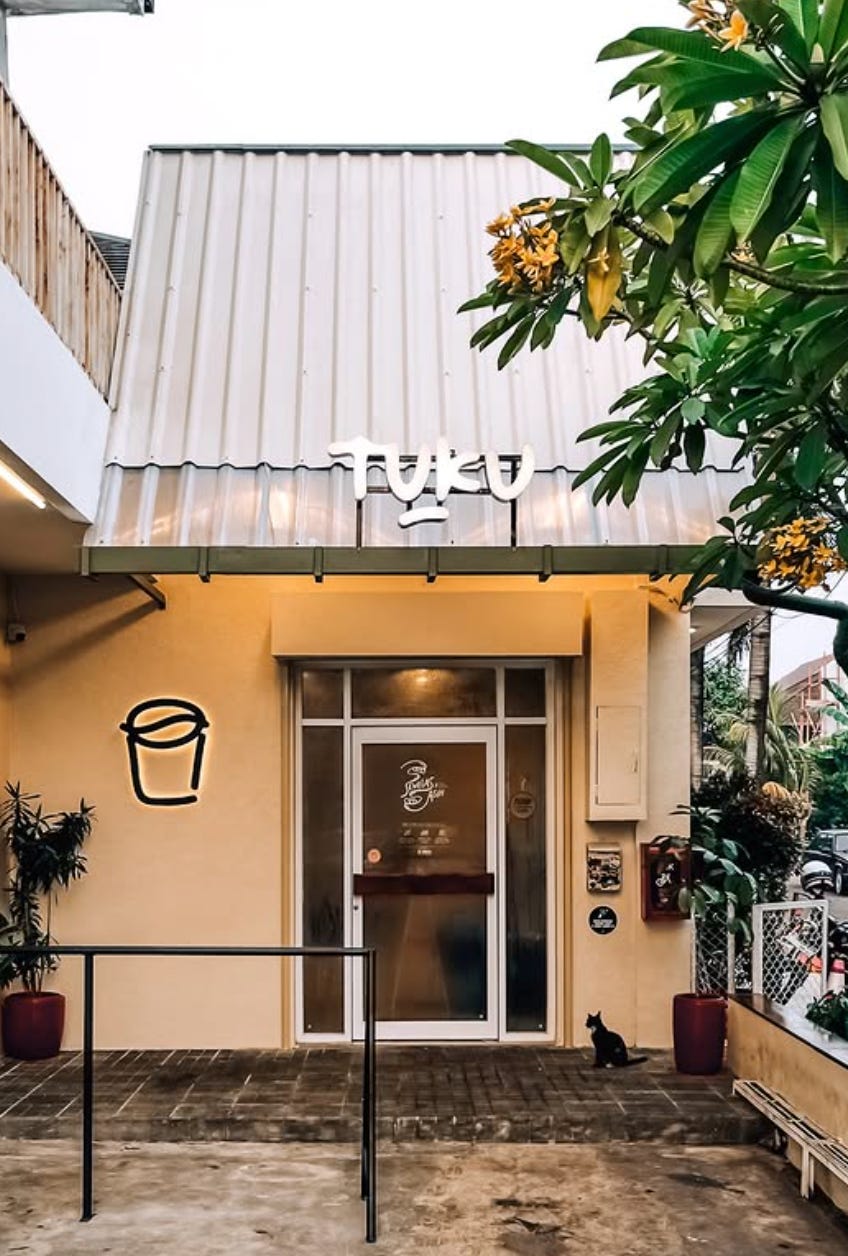
I want to go because nothing about this model exists in Europe. We don’t have a café brand here that’s simultaneously a delivery-first FMCG operation, a merch label and a loyalty-through-community-storytelling machine, at the scale Tuku has pulled it off in Indonesia. I’d want to see how a “café” without much of a café functions as a physical space at all, and what that means for the neighbourhoods it’s actually embedded in.
What I’ll be ordering: the Kopi Susu Tetangga, the original, no substitutions.

All Day Roasting Company from Taipei was named Asia’s Best Roaster at the 2026 Global Coffee Awards, sweeping multiple categories in a competition that pulled entries from India, Indonesia, Japan, Vietnam, Thailand and beyond. It’s the first year the Awards ran a dedicated Asia edition, and honestly, it’s overdue. Hong Kong’s oma Coffee Roaster and Thailand’s Addicto Coffee also picked up top honours.
Arabica prices posted their biggest single-day jump since 2022 after torrential rain hit Brazil’s growing regions, while robusta hit a five-month high on worries about Vietnam’s 2026/27 crop. Every trend piece I write about design and ritual sits on top of a supply chain that’s getting more volatile by the season, which is worth remembering considering how heavily this impacts new openings, but also coffee menus across the world.
Wayne’s Coffee, the 58-café Swedish chain, filed for bankruptcy over mounting rent debts, though the brand itself will keep operating under new ownership. A reminder that inflation and shrinking footfall are squeezing even established chains, not just independents.
If you enjoyed this edition, don’t miss these past editions,



Thank you for being here. If you love reading The Coffee Dispatch and want to support the newsletter, the easiest ways are to like this post, leave a comment, share it with a friend, or upgrade to a paid subscription.
You can also follow me on Instagram and LinkedIn, or check out my LinkedIn newsletter for practical café & coffee gear tips.
Cool photos ! love the framing.
Julie!!! Are you still in New Delhi?! If so could you please please visit Shack Coffee Co.? Its a small community-first bootstrapped cafe and roastery in the urban Village of Shahpurjat. I think it embodies India's burgeoning coffee scene and cafe culture beautifully.
I have been following you work for so long, and absolutely love what you do here. I am so excited you are finally in my hometown:)